
Introduction and Welcome [00:00:06]
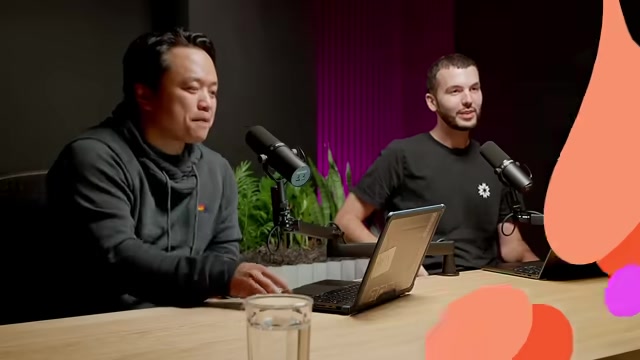 Alessio Fanelli: Hey everyone, welcome to the Latent Space podcast. This is Alessio, founder of Kernel Labs.
swyx: And I'm joined by swyx, founder of Smal AI. Hello, hello, and we are so excited to have Greg Brockman join us. Welcome.
Greg Brockman: Thank you for having us. Excited to be here.
GPT-5 and OpenAI's Recent Releases [00:00:23]
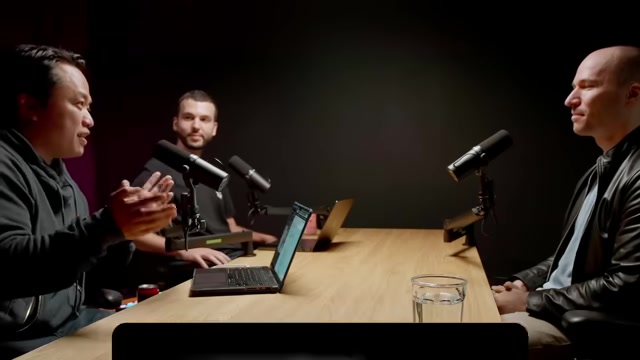 swyx: Congrats on GPT-5, GPT-OSS, like all the stuff that's going on in OpenAI lands. How's it feel? That last week was like a whole maelstrom of releases.
Greg Brockman: Wild. It was absolutely wild to get so many things out in one week. We released our open source models, which are models that we've been working on for some time. I think they really pack in a bunch of the advances that we've been making at OpenAI into a very small form factor, very accessible. They are now being used by, there's been millions of downloads of that just over the past couple days. We also released GPT-5, again, something we've been working on for a very long time. Having these out in the world and having done that release process is something that I'm just really proud of the team for doing.
The History of Reasoning at OpenAI [00:01:07]
 Alessio Fanelli: GPT-5 is the first hybrid model, so most people don't get to choose what model. You started originally the reasoning team with Ilya at OpenAI. Can you just give a quick history of reasoning at OpenAI? You started with just next token prediction, and then at some point you thought reasoning was something important to build. What was the path from there to GPT-5 where now it's kind of hidden from the user?
The Genesis of Reasoning Research after GPT-4 [00:01:33]
 Greg Brockman: After we trained GPT-4, we had a model that you could talk to. I remember doing the very first post-training, an instruction-following post-train on it, so it was really just a data set that was "here's a query, here's what the model completion should be." I remember that we were like, "Well, what happens if you just follow up with another query?" And it was actually able to then have a response that took into context the whole previous chain of question and answer. You realize this thing can do chat, it can actually talk to you, it can actually use and leverage all this information, even though it wasn't trained to do it.
I remember we had this question, we had a research meeting with a bunch of people, and the question was, "Why is this not AGI?" This model clearly is not AGI, but it's really hard to describe why. It's able to answer any question you put in front of it. It's not quite reliable, it makes mistakes, it falls off the rails. That's a real gap. So what do we need to do to close that gap?
The most obvious thing you need to do is actually have it test out its ideas in the world, actually do reinforcement learning, try out some hypotheses, get some feedback, and from there become reliable. This is not a new idea to us. If you rewind to even 2017, we were working on Dota, which was all reinforcement learning, no behavioral cloning from human demonstrations or anything. It was just from a randomly initialized neural net, you'd get these amazingly complicated, very sophisticated, very correct behaviors. And it's like, that's the reliability we want for our language models.
So really the moment we trained GPT-4, we knew that we needed to get to the reasoning paradigm. It was just a question of how. We had like 10 ideas, a bunch of different hypotheses about what might work, and people really set out to go and try to make it be a reality. It was really the labor of many people at OpenAI across many years. I think the way that progress in this field works is you need to have conviction on a direction. The first 10 things you try will fail, and most of the things on that list of 10 did not succeed, but we made one of them work. I think that that's the real key is that we just keep pushing and pushing, and you get little signs of life and you keep growing from there.
The Shift from Offline to Online Learning [00:04:04]
 swyx: I was going over when you were with me on the AI engineer conference, you talked about the Turing paper which you love and got you started on your machine learning journey. I think he kind of anticipated that the learning machine would be partially online. I think that's one of the questions I always had when reflecting on this journey from 3 to 4 and to 5. Learning started all offline and all pre-trained, and now it's slowly coming online. Do you think that's accurate?
Where Does Learning Happen? [00:04:33]
 Greg Brockman: I think it's a very interesting question, where does the learning happen? We're still not at the full learning loop that humans do. It's also not really clear if humans are fully online, because you go to sleep, and there's a lot of backpropagation, so to speak, that happens into your long-term memory. So exactly how humans work is not necessarily represented by how our machines work. But we are moving from a world where it's just you train once and then you're inferencing a ton, to a world where there's actually this loop of you inference and you train on those inferencings.
Ilya used to say that when the models are not very capable, the value of a token that they generate is very low. When the models are extremely capable, the value of a token they generate is extremely high. Reinforcement learning has this property that you're generating a bunch of data because the model is trying stuff, and then you train on that data. So somehow the model's observations, normalized by contact with reality, get fed back into the machine. That is I think something that we're starting to get very good at learning from.
The scale required is very different. If you look at pre-training, 10 examples of something doesn't go anywhere. You're talking hundreds of thousands of any little type of behavior, and that's what you learn from, which is totally unlike how humans learn, I think. But with the reinforcement learning paradigm, if you have 10 examples or a hundred examples of something, 10 paths you're supposed to do, and the model tries a bunch of times, not just one time, but 10,000 times to try to accomplish one task, and you select from those and you learn from that. You really get this leverage out of the human curator creating those tasks and are able to get very sophisticated behaviors from the models.
Now there's a next step of just having a model that as it goes is learning online. We're not quite doing that yet, but the future is not yet written.
The Bottleneck: Human Curation vs. Compute [00:06:46]
 Alessio Fanelli: Do you feel like today the bottleneck is still the human data curator that creates these great tasks for RL to work, or do you feel like it's still the sample efficiency of the model?
Compute as the Ultimate Bottleneck [00:06:59]
 Greg Brockman: The bottleneck is always compute. I mean that in a real way. It's very clear that if you give us a lot of compute, we will find ways to iterate that actually make the most of that compute. We are in a world where right now we have much more sample-efficient algorithms with the RL paradigm, but it does take a lot of compute still. It's like you have one task a human created, or 100 tasks, some small number of those, and then you have a model that tries a bunch of times to accomplish one task. So you really get this leverage as a human designer, but the amount of compute that you have to pour in to make it work grows proportionally.
Spending More Compute [00:07:48]
 swyx: One way to expend more compute in the learning process, Alan Turing actually foresaw a lot of this. He had this concept of super-critical learning instead of sub-critical learning, meaning we present learnings to machines, they learn just the immediate thing that we just taught. But super-critical means you also think through the second and third and fourth order effects of whatever you just learned to update the rest of everything else that you know. What are the creative ways in which we spend more compute? If we had 10x more compute or 1000x more compute, where does it go?
Finding Ways to Use Compute [00:08:18]
 Greg Brockman: I'll just say we will find ways to use it. The way that this works, if you rewind to something like Dota, we set out to develop new reinforcement learning algorithms because it was very clear to everyone that the reinforcement learning algorithms that existed at the time did not scale. Everyone knew it. And I remember Jakub saying, "Why do we believe that? Has anyone actually tested it?" No one had actually really tried to scale up plain old-fashioned PPO. So they're like, "Well, that's the baseline, we got to do it."
I remember you'd come back to the office every week, they doubled the number of cores, and suddenly the agent, the true skill was going up into the right, and it's like, "Okay, you've just got to keep pushing it until you hit the wall." And clearly, when we hit the wall, then we can go and do the actual interesting stuff. We never hit the wall. You realize that actually the journey of that scaling, that is the interesting stuff, of really doing the engineering. Of course, you have bugs, and those bugs cause a wall, but you fix the bug. You have different issues with how your neural net's initialized or the scale invariance or whatever the issues are, but those are not the fundamentals of the algorithm, of the science.
I think that's kind of the world that we're in, is one where we will push on every dimension and maybe we hit a wall. Most of the time, those walls are like just bugs and silly things, and so you can keep going. Sometimes the ROI for fixing those is really hard, so it's not really worth it because you have a different dimension. Do you want to push the model to be larger and do more pre-training compute, or do you want to do more RL and so push more compute to the actual test time?
I think of compute as we're doing this refining process. Ultimately you start with energy, turns into compute, turns into intelligence, and it's almost crystallizing that compute into potential energy that can be converted into the model doing something useful. It's a really beautiful thing that compute as this fundamental driver, this fundamental fuel of intelligence, it sort of shapes the neural net, it sort of outputs a program. The nice thing about that program is you can run it many, many times. So even though you ported all this compute in, you actually have this amortization. You're going to use it far more times than the amount of effort you put into creating it once.
Generalization of Models across Domains [00:10:30]
 Alessio Fanelli: You're kind of turning kinetic energy into potential energy in the model. Do you feel like the energy that's already in these models, we can then turn back into kinetic to do RL in every other domain? Because we got the IMO gold medal—I mean, we, in the you guys—do you feel like those same techniques and those same base models can then get us to the gold IMO gold equivalent in every other domain if we just scale the compute, or do you feel like there's still some work to do?
Transferable Skills and General-Purpose Learning [00:11:00]
 Greg Brockman: We have pretty good evidence on things like the IMO models actually also getting us a gold in IOI. That's a fun fact. There's a little bit of difference in the harness, but the harness is not the gold, literally. It's the actual underlying models, and there's no training there that we did specifically. This ended up being just a side project of a few people who were like, "We may as well do IOI, right?" And it's just a wild fact to me because that used to be something that would be a total grand challenge, many, many people working on. The core IMO team at OpenAI was actually three people. It wasn't this massive effort.
You realize that there's maybe some specialization required for some of these domains, some amount of "go gather a data set." But fundamentally, we have this general-purpose learning technology, and learning to solve hard problems is actually a very transferable skill. Learning how to solve hard math problems and write proofs turns out to actually transfer to writing programming competition problems.
Now, if you've never run a physics experiment, you're probably not going to be magically good at those things. So there is something about the limitations of generalization, that you do need to actually have some real-world experience and try it out. But these models, they go almost unreasonably far already. We see this all the time where we have wet lab scientists who took models like O3, asked it for some hypotheses of "here's an experimental setup, what should I do?" They have five ideas, they tried these five ideas out, four of them don't work, but one of them does. The kind of feedback we were getting on O3 was resulting work is something that could be published in a mid-tier journal. Not the top-tier journal, but a mid-tier journal, the kind of the work you'd expect from a third-year, fourth-year PhD student.
Again, it's just a wild fact. That's where we are with O3, and we see exactly how to improve O3 on all dimensions. It requires compute, requires a lot of work, it requires getting the tasks, it requires a lot of humans' intellectual love and labor and time and really pouring our heart and soul into it. But the result, to your point, we produce this thing that has all this potential energy within it. And then the amazing thing is that you don't release that potential energy once. It's a checkpoint that you can use many, many times across all of these tasks. That is something that I think really can uplift all of humanity.
The "Wall" and the Future of Learning [00:13:22]
 swyx: I think there is a wall in terms of wall clock time because time has to pass. The problem with RL interacting with environments and simulation is sure, you can speed up the simulations faster than real time. At some point, you have to match wall clock time. You can see us converging towards the pace of iterations towards wall clock time in terms of getting closer and closer to modeling the real world. I don't know if you have any thoughts on tackling that. Obviously we're not there yet, so we don't have to worry about it.
Non-Human Affordances and The Future of Compute Distribution [00:13:44]
 Greg Brockman: I think that is a pretty fundamental barrier. The models have very non-human affordances. You can run many copies of them, so you can scale out even if you can't decrease the latency. It's also very interesting to think about where the compute goes. We're going to move from a world where most of the compute is training the model. As we've deployed these models more, more of the compute goes to inferencing them and actually using them. But then if you think about having these models interacting with the real world a lot, they should probably think a lot about every single action. So you might end up with tons of compute spent per real-world interaction, and so it really shifts around where you'd expect the compute to actually be expended.
I think that having good harnesses that are very efficient, how do you checkpoint a rollout in the real world? If you have a system that you need to restart and it's going to forget all of its current state, that's probably pretty bad. So there's something very different about the digital world where everything can be perfectly observed and checkpointed and preserved, as opposed to reality that's much more messy and complicated.
It's not a bad thing. We've seen agents with things like Dota that are able to operate in very complicated, very messy environments, so the algorithms are capable of it. By the way, Dota was like a 300 million parameter neural net. Tiny, tiny little insect brain. Now we're starting to scale up to things that are much more comparable to human scale in terms of number of parameters, maybe in terms of number of compute. Fundamentally, we are making progress towards the real goal. If you think about what an AGI should be, it should be something that is capable of interacting with the real world in ways that are very productive.
Back-of-the-Envelope on Model Size [00:15:54]
 swyx: The numbers I have in my head, you can correct me if I'm orders of magnitude off, but it's something like humans have 100 trillion neurons. We're in the multiple low-double digit to high-single digit range for GPT-4, 4.5 and 5, but we're scaling there.
Greg Brockman: I'd say 100T synapses, which kind of corresponds to the weights of the neural net. We're starting to get to the right numbers.
Learnings from Arc Institute (Biology & LLMs) [00:16:24]
 swyx: What did you learn from Arc Institute? You had a sabbatical there. I'm curious if that informs anything that you do at OpenAI now.
Biology as an Alien Language [00:16:36]
 Greg Brockman: The thing I found most remarkable about working on DNA neural nets is that they're exactly the same. It's just you replace human language with the four letters. We just did character-level. And this to me is the core, like one of the interesting things about human language is we understand the semantics, we understand what it means, what the structure is, it's very easy for us to observe. We have a sense of when you look at a tokenization scheme, did you capture all of the words in a reasonable way and all this stuff? Biology, it's an alien language.
The thing that's very interesting is that for humans, it's an alien language. But if you look at a neural net, why should human language be any more natural to a neural net than biological language? And the answer is, they're not. They're both literally the same hardware. So one of the amazing hypotheses is that these neural nets, they can learn human language just fine, and so they ought to be able to learn biological language just fine. We really see the same kinds of results. I'd say that maybe the neural net we produced, a 40B neural net trained on 13 trillion base pairs or something like that, the results to me felt like GPT-1, maybe starting to be GPT-2 level. Accessible or applicable to downstream tasks across a wide range of biological applications. Not yet a GPT-3 or GPT-4, not a GPT-5 for sure. We're not able to solve super hard problems in these domains just yet. But we've got compute. We've got the right techniques and algorithms. Now we need to scale, we need to think about long context. There's different ways that biological systems stress the models relative to language sequences. A language sequence of a billion tokens doesn't really exist, but it does in your DNA. So you have some sort of different emphasis, but fundamentally it's the same problem you need to solve.
Applications in Biology and Drug Discovery [00:18:51]
 swyx: Is there an application that you're most excited about, like drug discovery, or maybe some intermediate thing before that that is reachable and very impactful?
Personal Motivation and Understanding Biology [00:19:02]
 Greg Brockman: On a personal level, my wife has a genetic condition called Ehlers-Danlos syndrome. It's something that until very recently, and I think we're starting to see genetic markers for it, but it's been unknown exactly what causes it, where it comes from. That is something where if you have better tools for understanding biology, you should be able to identify the markers for lots of different diseases. That's just like one example of the kinds of applications, the promise that exists within these neural nets.
Characterizing the GPT-5 Era [00:19:35]
 Alessio Fanelli: How would you characterize the beginning of the GPT-5 era? If I think about 3, 4, 5 as the major versions, I think 3 is very text-based, kind of like early dev, really getting started. 4 is multimodality and all these different low latency, long thinking with O3. What's going to be the 5 flagship thing? Obviously the year of agents, that's the meme, but is there something else that comes to mind that people should think about? With 5, now we unlock X.
The Era of "Smart" [00:20:02]
 Greg Brockman: I think it's smart. I think that the intelligence of these models is starting to be just almost indescribable. There are still limitations, there's still ways in which they fail. But it really is the case that for extremely hard domains, look at the IMO results. You can take a model that's been trained on this reasoning paradigm, and it's able to write proofs that is at the level of the best humans. In this specific domain, there's limitations, we haven't proven an unproven theorem, any of that stuff, but it's real. It's undeniable at this point that these models are able to perform great intellectual feats.
I think that's new. GPT-4 was much more capable and commercially useful across a wide range of applications, but the ideas that it produced were not very deep. The problems it would solve, it was not very reliable at. I remember with GPT-3 actually trying to teach it how to do even basic stuff. I was like, "Can I just teach this thing to sort a list?" And I gave it like seven numbers to sort, it didn't sort it. I was like, okay. Then I tried to write a whole script of like, "I'm a teacher teaching you how to sort numbers," here's an example of sorting two numbers and then three numbers and whatever, and I'd be like, "Okay, now here's five numbers" and total flop.
If you ask GPT-5 that, and I've not even tried, by the way, asking GPT-5 to sort a list of five arbitrary numbers, but I am certain it will do a perfect job of it out of the box, no problem. By the way, it does have access to Python tools as well, so maybe I'm undermining my own argument here. But the point is that the intellectual leaps that these models are capable of assisting humans in is something that we're just starting to see. We started to see it with O3. You can see professional mathematicians starting to kick the tires on GPT-5. We've seen physicists starting to kick the tires and GPT-5 and say that this thing was able to re-derive an insight that took me many months worth of research to produce.
That's the kind of thing where you realize this will speed you up so fast. I remember doing my own math research back in high school and at the beginning of college, and I'd spend just so long just trying to manipulate these objects in my head and think about connections between things. If I had a partner that I could actually talk to about this who would actually spend the time to deeply understand what I'm thinking about and produce new insights off of what I'm suggesting, that would have just sped me up so much. It would have been so much more fun because you don't just kind of get caught in this loop of just sort of thinking about it off on your own and thinking, "Wait, I already thought this thought two weeks ago." So I think that there's just something new about pushing forward the intellectual frontier together as a partner with GPT-5.
Unlocking the Potential of New Models [00:22:53]
 Alessio Fanelli: What are suggestions on a more practical level that you have on getting the potential energy out of these models? So part of it is adding the linter, the type checker, the tests, like have it self-loop. Any other meta that developers should think about? How do you use the models?
The Skill of Using Models [00:25:23]
 Greg Brockman: The number one thing that I've observed is that there is a real skill in extracting the most from these models, and it requires this tenacity of really trying to almost understand the shape of the model's skills and weaknesses. So you test it, you test it with something small, you get a little feedback, you test a little bit higher, try to give it some bigger tasks, try to see if it can work in a certain way. People usually have their library of different prompts. I definitely have my library of prompts that I've built up since the GPT-4 days.
In terms of actually testing the model and pushing it, I think that I do a lot of trying to think about, okay, how do you first of all break up tasks and have something that's self-contained that you can let the model run with? Because you don't want to just have one instance of the model operating, you want to have multiple. You want to be a manager of not an agent, but of agents. You need to first of all think about how your codebase is structured, but then actually go and try to push the model to say, "Can you actually operate it on these multiple different pieces of your codebase?"
I think that people love doing front-end 5 testing. GPT-5 is very good at front-end, turns out. But of course, that's not what most developers spend their time doing, so it's important not to overfit to that. I think that just getting a feel for the model and kind of starting to become in tune with its strengths and weaknesses and viewing it almost as an extension of yourself and know... Often another thing I'll do is just be kicking off tasks to the model that are sort of not on the critical path while I'm thinking about some super hard thing that the model for whatever reason I don't want it operating on. And so I'm just constantly getting information back on just like, okay, was it able to do a thing or it's just low risk if it makes a mistake because I don't feel like I had to sit around waiting for five minutes and then get no return.
The Roadmap for Coding Agents [00:27:33]
 swyx: You've always mentioned that the roadmap for Codex and OpenAI's coding capabilities is that the background SWE-agent is going to merge with the in-IDE agent. How's your thinking evolved there? Is it just as simple as the IDE can call the background APIs and the background APIs can export to the IDE, or is what's a deeper connection than that?
The AI Coworker Analogy [00:27:53]
 Greg Brockman: I tend to think about AI productization by analogy to a coworker. What do you want out of a coworker who's a great programmer? You want to Slack them. But sometimes you're like, "I kind of need help with this thing, can you come over and look over my shoulder?" and "Could you take the keyboard?" You want the pair form factor. You also want the remote async form factor, and you want it to be one entity that has knowledge and memory across all of this. You don't want it to be a junior programmer who shows up every day being like, "Okay, I forgot everything, could you remind me how to SSH into the whatever?"
All of that has to happen. You need AIs that have access to your infrastructure in a trustworthy way, a way that you can audit. One thing that is different about these models is that they're fine being micromanaged. Turns out humans don't like that very much. But the models are perfectly happy to. That's an affordance that's well worth thinking about and changing the interfaces to take maximum advantage of. At the same time, you really want the seamless blending between a model that's able to do a bunch of work on its remote machine, doesn't mess up my local state, fully sandboxed, fully observable, and then sometimes can be like, "Okay, I'm ready to run something locally." Depending on what that is and how sandboxed it is, you could do one-off approvals, you could give it full delegated access. Having the human be in control of this observability and managing this team, an agent that has just different surfaces... The identity of the agent being something that runs locally versus something that runs remotely, to me that's the wrong question. It's really the agent should be this model that's executing and then requesting to run things in a remote sandbox or locally or maybe multiple sandboxes, or maybe it's running on your computer and my computer. There's no reason that it has to be local to any of these things. Self-agents, you can just sort of seamlessly and fluidly move around.
Agent Robustness and Defense in Depth [00:30:04]
 swyx: You mentioning approvals gives me a chance to spotlight my friend Fuad who is helping to start the Agent Robustness team that was also launched at AI Engineer. What's that? What's OpenAI's interest in that?
Defense in Depth for Agent Safety [00:30:13]
 Greg Brockman: The way we think about agent robustness is through defense in depth. There's a layer of the model itself. We've published techniques like instruction hierarchy. With instruction hierarchy, you sort of indicate that this message is from the system, this message is from the developer, this message is from the user, and that they should be trusted in that order. That way, the model can know something that says "ignore previous instructions" from a user, "I'm not going to follow that." So having systems at a low level that are robust against these attempted exploits is very important.
But that's not where you stop. You want multiple layers of thinking about the system controls. If a model is sandboxed and isn't actually able to execute something or access a specific piece of data, then you have full guarantees around what's possible. There's various levels in between of the approach that we take. As these agents become more embedded in our lives and are trusted with more responsibility, it's also increasing the safety and security of them in lockstep.
The Importance of the Model Spec [00:31:22]
 swyx: I invited a talk on the model spec for AI engineer, and that was the most viewed talk of all that we've ever had. It's hard to make safety and reliability sexy.
Greg Brockman: I think the model spec is a perfect example of when the models are very capable, you start to really care about what they're going to do. That becomes the most important question. The model spec is an example where we've made it very legible to the outside world what our intention is for this model to do. It doesn't mean that we always produce a model that is capable of following that, but it's a north star. It's something that really sets, "this is the intention," and anything that deviates from that is not through our explicit effort, it's anti to our explicit effort. The gap between the spec and the actual behavior is shrinking very constantly.
The thing that's very interesting is it's almost like values. It's really thinking deeply about what a model should do if you ask it a controversial question, right? If you say, "I think that the world is flat," or whatever, is it supposed to say, "Yes, it's flat," or is it supposed to be like, "Well, here's what science says." Honestly, these things are subtle. It's not really clear what the right thing is just on two minutes of thinking about it. But if you read the spec, you can really see the thoughtfulness that has gone into it. It's not the final answer. It's something we want feedback on, something that we want to produce collectively as a community.
Foundation and Psychohistory of LLMs [00:32:58]
 Alessio Fanelli: I was listening to your old Lex Fridman interview, and you kind of mentioned Foundation by Asimov. It made me think about how certain languages have inherent capabilities. Like Rust is memory safe, and so that just happens. Do you see almost like a psychohistory of LLMs and software engineering where it's like, "Hey, these models, I can predict the way software is going to look. Everything is going to be blue and purple gradients." What else are these models really driving us towards, and is there a way that we can change that?
The Psychohistory and Co-evolution of Models [00:33:38]
 Greg Brockman: There's definitely a psychohistory of them because to some extent, these models are a product of psychohistory. These models have been trained on observing human thought. That's what you can think of: take public data, learn on that, and just observe. The point is to understand the rules that govern a data set, what are the underlying rules that generate the data in the first place. That's kind of what these models grew up on. It's almost like watching a bunch of TV as an alien trying to figure out what are humans all about.
Then you have this reinforcement learning phase where they actually got to try things out, and there are given positive and negative feedback depending on how much that aligns with what the human wants. And now we put them in reality and say, "Okay, now try stuff, and here's a new task you've never seen before." And it uses all of that previous history to decide what to do. The biological analogy to humans, it's very easy to overstate it, but it's also easy to understate it. I think it is at least a useful template to think about. To some extent, that's how humans work too. You have some sort of prehistory coded into your DNA, you have your life experience, you have your parents who provided positive and negative rewards, and you have your experience in just trying things out in reality, and now you have to go out and use that knowledge and what do you do?
I think that for models, the future is not predetermined. It's not like the algorithm itself says that the model's going to have to prefer purple gradients or something. But there's something in this whole process that does produce that preference. I think one of the opportunities with models, one thing that Alec liked to say is that these models are less like a human and more like a humanity. There are so many personalities embedded within them, it's almost every single personality is in there, and our goal is to elicit that personality. Some of this post-training work, some of this reinforcement learning work, almost narrows down the space of those personalities to just the ones that are desirable. What that means is that we have both an opportunity to produce models that operate according to our values. If you don't just want the purple gradient one, you want the blue gradient and the green gradient, whatever, you can have all that in a single model, it's fine. In GPT-5 itself is extremely good at instruction following, so it actually is the most personalizable model that we've ever produced. You can have it operate according to whatever you prefer, just by saying it, just by providing that instruction.
Correcting Undesirable Learned Behaviors [00:37:23]
 Alessio Fanelli: How do you do that when the RL rewards are kind of tied to things that the humans maybe don't prefer? In my experience, it's been like
 try-catch. The models love to write try-catch so that it doesn't fail. Do we need just a lot of preference data that shows them they shouldn't do that? Is there something in the RL environments that we're going to change to make that less desirable? I'm trying to figure out where we go from here.
Multi-faceted Interventions and Generalization [00:37:45]
 Greg Brockman: I think that the way that you decide where do interventions go is very multifaceted and it's very specific to the behavior. There are some things, like the model's knowledge of different libraries and things like that, that's kind of baked in from the early days. But you can also teach the model that, "Hey, don't rely on your previous knowledge, go and look up the most up-to-date docs," and that's something you can kind of put at a higher level. Then something like overusing
 try-catch, that's something you can actually prompt the model for. And that's something where when we train it with reinforcement learning, you can provide rewards saying, "Don't go in this direction."
The beautiful thing about these models is it feels like okay, there's probably a long list of different preferences and different styles and things like that that you're going to have to give it feedback on during training if that's the way you want to go. But these models generalize, the algorithms that we have generalize, and that's the beauty of deep learning. That is the true magic. We kind of have this whole stack now that's built up around the core of deep learning, all these ways of orchestrating models and how you get feedback and all of these things. The core magic of deep learning is its ability to generalize. I think that the same is true for these models. In order to get them to be able to operate according to different preferences and values, we just need to show that to them during training. And they are able to sort of generalize to different preferences and values that we didn't actually train against. That's something that we've seen very consistently across different model generations.
The Router in GPT-5 [00:39:28]
 swyx: You have acknowledged that there's a router, which is really cool. I was also listening to your podcast with John Collison, which is a really fun format, and you told the story of the Dota side that I don't think I've heard before about the beta model versus the main model and stitching it together. Is that a similar insight for GPT-5's router where you have a reasoning model, a non-reasoning, and then you just stitch it together?
Model Switchers: Present, Not Future [00:39:58]
 Greg Brockman: To some extent, yes, in that multiple models and you put some sort of router on top of them. That specific one was for a very specific reason, which is that we had a deficiency on the first half of the game, and it kept losing. There's part of the game that this specific model didn't do a good job of, and there was a part of it that it did. And there, the domain they were operating in was simple enough, it was very easy for us to say, "Here's when you want to use one model versus the other."
To some extent, what we have with GPT-5 is no different. We have a reasoning model that we know is good for applications that require this intelligence, but you're okay waiting a little bit longer. We have a non-reasoning model that is great for applications where you want the answer fast. Still a good answer, but not deeply thought through that might have a lot of tricks to it. Then you just kind of want to put an if statement that says which of these it should be. Not pushing that burden to the user is actually a really nice thing.
I do want to say that model switchers are not necessarily the future, they are the present. Having a fully integrated model that just does the right thing feels very preferable in many ways. The flip side though is that I think the evidence has been away from having the final form factor, the AGI itself, being a single model, but instead thinking about this menagerie of models that have different strengths and weaknesses. I think that's a very interesting finding of the past couple years. It's much easier to have a small, fast model that's less capable but can do a lot more, you can generate a lot more tokens from it, coupled with a much more expensive reasoning model. If you combine those two things, you kind of get adaptive compute, and we haven't really cracked how do you do adaptive compute within the architecture. But doing it within the orchestration of a system is very straightforward. So I think you get a lot of power out of the fact that these models are composable in this way.
GPT-5 Router Parameters [00:42:02]
 swyx: Whoever did the model card was amazing. They even provided the big parameters to the
 if statement of conversation type, complexity, tool needs, explicit intent, and usage rate limit, which is kind of interesting. Any one of those you want to comment on in particular that was interesting for debate?
Simplifying Complexity for the User [00:42:18]
 Greg Brockman: I think honestly all of it is fairly what you'd expect. The core message in my mind is that at OpenAI, there are many things we've done right. Naming is not one of those. Having a simple surface for users to understand how to use it is not necessarily one. If you look at all the different models that we've had, how are you supposed to know which one to use? I remember my wife was using 4O at one point. I was like, "No, you need to use O3," and she's like, "Wait, but why is O3 better than 4O?" We clearly needed to do a reset, a reset on complexity. I think that us internalizing that complexity rather than pushing it to the user, that is really important. So I think this is a first step. We've heard loud and clear from the community about the places where they weren't ready, that we were not delivering on that simplicity for people. It should just be, it's always better to go with our choice of it rather than the manually selection, and we're not quite there yet. But I think that we can make the progress. I think that ultimately our goal should be to both make sure that power users are able to have the kind of control and consistency that they're looking for, while also not forcing the broad base of people who don't want to have to think about the 4O, O3, all that stuff, to have to go to that level of detail.
The Future of GPT-5 Pricing [00:43:43]
 swyx: We talked about the GPT-5 pricing is aggressive and very competitive, even compared to Gemini. One thing I was surprised to learn from the meetup that we had the other day was that GPT-5 pricing can go much cheaper. What degree of order of magnitude are we talking?
The History and Future of Price Cuts [00:44:00]
 Greg Brockman: If you look at the history of our pricing, we have very consistently cut prices by like 10x per year, probably more aggressive than that, which is a crazy thing. You can see it with O3, we did like an 80% price cut, and actually the usage grew such that it was either revenue was either neutral or positive. It just shows you that there's this demand that is extremely steep. So if you just make it more accessible and available to people, they will use way more of it. That's very aligned with our mission. Our goal is to ensure that AGI benefits all of humanity. Part of that is making sure that this technology is broadly distributed, that lots of people are using AI and using it to apply to things in their life and their work. One of the things that helps us get there is by having more efficient inference, having cheaper models, all of these things.
Now what unlocks it partly is having just more compute. Right now we are extremely compute-limited, so if we were to cut prices a lot, it wouldn't actually increase the amount that this model is used. We also have a lot of efficiencies to gain, and that's something where our teams are always working super hard to get to the next level of inference efficiency. Some of this is about improving the model architecture itself. There's lots of architectural decisions that you can make. And now that we're in this world of reasoning, it's not just about the model architecture, it's also about the post-training, right? It's about how long does it think for a specific task and things like that. So there's just many, many dimensions of improvement that we have to make, and we'll keep pushing.
Self-Improving Coding Agents [00:46:12]
 Alessio Fanelli: For the GPT-5 release, I did this article called "Self-Improving Coding Agents." I basically asked GPT-5, "Can you build tools for yourselves to be a better coding agent?" This is a SWE-lancer task. It does the task, it kind of fails in some ways, and then I asked it, "Can you improve the tools for yourself?" and kind of do this loop. What I found is that the models don't really like to use these new tools that they've built for themselves. They basically respond saying, "I can just do it. I don't really need the tool."
The Path to Self-Improvement [00:47:00]
 Greg Brockman: I think that's going to be part of the step for sure. I think it's not like we're at zero on being able to do that. A lot of this is just about the training. If the model really has trained with just a specific set of tools, hasn't really been pushed to adapt to a new tool very quickly, then you shouldn't expect it to do any differently at evaluation time. But the idea of producing your own tools that make you more efficient and build up a library of those over time in a persistent way, that's an incredible primitive to have in your toolbox. I think that if your goal is to be able to go and solve these incredibly hard, challenging, unsolved problems, then I think you're going to need that kind of thing as a dependency.
Current State of AI Research [00:47:38]
 Alessio Fanelli: What do you think about the current state of AI research? Is everyone really just doing the same thing? Do you feel like every lab has a different take that is eventually going to help us converge to the right thing? Or just because now the dollars have gotten so big that you need to do the thing that you think is going to work?
Diversity in AI Research and OpenAI's Strategy [00:48:00]
 Greg Brockman: I think there's a surprising amount of diversity in the field. Sometimes it can feel like there's convergent evolution, but if you really talk to people at different labs, you really realize that there's different perspectives people have. One of the decisions we made early on in OpenAI was that we really wanted a set of people who are aligned in how they think. For people who have been pursuing a PhD for a long time, who sort of have their own research vision, you kind of can't tell them what to do. So if you want people who are going to row in the same direction, it means you have to select that set of people. That was the most, maybe important, early decision that we made at OpenAI that helped us to achieve the things that we have.
I think that means that you necessarily have different vectors that you could pick. You really see it in the taste of different labs and what they focus on, what they produce. At OpenAI, I think we've been very much focused on, "How do you do the research that gets you to the next level?" Even for something like GPT-5, we had a lot of pressure to think about, "Okay, let's just do the grind of here's feedback on problems that we have on the coding side." You can pursue that grinding and get somewhere, but you also sometimes have to step back and think about how do you do the next step function? How do you do the next paradigm shift? Something like the reasoning paradigm is a good example of a time that we did that very successfully. We've done that many times over the course of OpenAI, and we'll continue to do that. So I think that the breakthroughs remain to be made. There's such a diversity of multimodality, different ways you could generate things, and all of this stuff that I think that the field of research is more abundant than it ever has been.
Small Teams, Big Impact [00:59:51]
 Greg Brockman: Remember Sora? It was like the biggest thing in the world. It's amazing. That's the kind of thing, by the way, that was really a team of a small number of people who were really focused on that problem for multiple years. That is the core ethos of OpenAI, is to make these long-term bets on problems that matter in a direction that really adds up to a cohesive whole.
Prioritizing at OpenAI [01:01:13]
 Alessio Fanelli: From the outside, it's kind of hard to figure out what you're focusing on. Imagen just came out of the blue almost, which was great, got a lot of adoption. How should people think about how you prioritize versus what people should explore and build and should wait for you to improve on?
The Vast Possibility Space [01:01:30]
 Greg Brockman: There's a massive possibility space in this field because neural nets, deep learning is applicable to effectively any sort of data, any sort of domain. We can't do everything. The core reasoning paradigm, that clearly is something we're going to keep pushing on. Multimodal, voice, things like image generation, video generation, these kinds of areas are also things that we view as very important and all kind of fit together. But there's been areas where it's just hard for us to really figure out how do we prioritize it as part of the core program.
We've been through times where, for example, robotics was one in 2018 where we had a great result, but we kind of realized that actually we can move so much faster in a different domain. We had this great result with the robot hand solving, unscrambling a Rubik's cube, and that team was bottlenecked by the fact that this robot hand, you could run it for 20 hours before its tendons would break. So then you would have a mechanical engineer come and fix it. And that team went on to go do what became GitHub Copilot, which is obviously an amazing feat and a real accomplishment and something that they were able to move so much faster in the digital domain than in the physical one.
So I think that for us, we really try to... we have limited bandwidth, right? We are one company, one lab that's focused on, as much as we can, a coherent one problem. And so I think that you can kind of look at the set of things we're doing, and sometimes we'll do offshoots, and sometimes that will be something that then becomes part of the core program. But there's just so much possibility space for everyone.
Closing and Final Questions [01:03:08]
 swyx: Let's have a few small little lightning questions.
Starting an AI Lab Today [01:03:18]
 Alessio Fanelli: When you started OpenAI, you almost believed it was too late to start an AI lab. What are things that people today think it's almost too late to do that they should be doing?
Connecting Models to Real-World Applications [01:03:28]
 Greg Brockman: It's pretty clear that connecting these models to real-world application domains is extremely valuable. Sometimes it might feel like all the ideas are taken, but the economy is so big. Every application of human endeavor is so big. So it is worthwhile and really important for people to really think about how do we get the most out of these amazing intelligences that we've created. A lot of that is, for something like healthcare, you have to really think about all the stakeholders, you have to think about how does the system work today and how do you slot these models in well. I think that's across all of these domains, there's so much fruit that has not yet been picked. Go ahead and write the GPT wrapper. But the thing that I would advise is to really think about domains where the value that you're producing is not necessarily just having written a better wrapper, it's really about understanding a domain and building up expertise and relationships and all of those things.
Angel Investing [01:04:23]
 swyx: You do occasionally angel invest. What gets your attention?
Greg Brockman: I actually have not angel invested for a number of years now. Everything is a distraction from OpenAI, and I just like to stay laser-focused.
A Note to Future Greg (2045) [01:04:35]
 swyx: What is one post-it note you want to send to 2045 Greg? So you'll be 58.
Greg Brockman: How's the Dyson sphere? I don't know if you've actually done the math on what it takes to do that. More seriously, 2045 is just so hard to imagine given how fast things are moving right now. I hope it'll be a world of amazing abundance. I think at that point, we really should be multi-planetary and almost any sci-fi dream you can imagine, it's hard to deny its possibility except for things that are limited by the physical ability to move some atoms at that rate. But I just hope that that world is as amazing as it could be sitting here in 2025.
UBI and Abundance [01:05:20]
 swyx: Will we even need UBI with abundance? True abundance means we don't need it.
Greg Brockman: I think there's been a lot of debate, I remember early on in OpenAI, of "post-AGI, will money mean anything?" It's really unclear, right? If you can just talk to a computer and it'll produce anything you want, and if you want some physical good, some material item, and it can just be manufactured for you instantly, effectively free, what does money mean?
The flip side is that I think there is one resource that is very clearly going to be in very hot demand, which is compute. Already, it's the case we see this within OpenAI that the researchers that have the access to the most compute are able to have the biggest projects and do more. In the future, thinking about how do people get access to compute, and the more compute that you have for whatever task you care about, it will be solved more, the more will happen. I think that the question of what the compute distribution looks like will be something very important. So I think that the question of if you don't do work, do you survive? I think the answer will be yes, you'll have plenty of your material needs met. But the question of can you do more? Can you have not just generate like as much Sora movie as you want, but have like this amazing detail and all this extra fanciness to it and have this thing go think super hard for a hundred years worth of a subjective experience about what the best thing is for you specifically? I think that there will always be more return on more compute, and so that will be something we have to really think carefully about, about how that society is architected.
A Note to Past Greg (2005) [01:07:04]
 swyx: Post-it note to send to 2005 Greg, so 18-year-old. What's a little bit of advice to yourself, and obviously this is a proxy for everyone else, right?
Greg Brockman: I think the single thing that I have been most surprised about is that the abundance of problem grows over time. I remember in 1999, 2000, reading about Silicon Valley and feeling like I've missed the boat. I was born just a little bit too late. It's very common. Just felt like all the cool problems must be solved by the time I'm ready to go work on things, there'll be nothing left. That turned out to be totally false. Now is just the most exciting time to be in technology, to really be operating in the world because we have this amazing tool that is going to uplift and revolutionize every application, every field of human endeavor. I think that the fact that that's something to be excited about, that's something that we can apply, and there are challenges we have to work through, no question, but for the purpose of achieving this amazing outcome. I think that just that message of that the problem availability will grow over time rather than shrink, I think is the core thing I wish I had sort of internalized at the moment.
Thank You [01:08:20]
 Alessio Fanelli: Awesome. Thank you so much for joining us, Greg.
Greg Brockman: Thank you both. This has been great to be here.
swyx: Appreciate your time. Thank you so much.